Ganesh Angadi - DevOps Engineer
About Ganesh Angadi
01 / ABOUT
System Thinker
GANESH ANGADI
DevOps Engineer since 2023. Focused on Docker, Kubernetes, Linux fundamentals, and System Architecture with strong system design expertise.
I don't just build features. I design systems. I think in control flow, model failure states, and design for observability. Read about my MY(suru) BUS system design project or explore my DevOps learning journey.
CORE COMPETENCIES
- ▸Docker (complete) - containerization, multi-stage builds, orchestration
- ▸Linux fundamentals - filesystem, permissions, systemd, process management, logs
- ▸Git beyond push - commit graph mental model, branching strategies
- ▸CI/CD pipelines - Jenkins, GitLab CI, automated testing and deployment
- ▸System architecture - questioning decisions instead of blindly using tools
Achievements & Awards
02 / ACHIEVEMENTS
Recognition & Awards
DevOps Projects
03 / PROJECTS
MY(suru) BUS[GitHub]
Real-Time Bus Tracking System
A city-scale real-time bus tracking and management platform built by Ganesh Angadi, a DevOps engineer focused on system reliability and Linux-based infrastructure design.
[ARCHITECTURE]
- Admin Dashboard – Next.js
- Driver App – React Native (Expo)
- Passenger App – React Native
- Backend – Supabase (PostgreSQL, Auth, Realtime, RLS)
- Maps – Leaflet + OpenStreetMap
[CORE DESIGN PHILOSOPHY]
- ▸Reliability over UI
- ▸Database as single source of truth
- ▸Enforce logic at DB level using RLS
- ▸Event-driven realtime architecture
- ▸Offline-first design with queue + auto-sync
[KEY FEATURES]
- •Live GPS tracking
- •Geofencing-based stop detection
- •ETA recalculation
- •Role-based access control at database level
- •Offline location queue with timestamp sync
- •Admin observability dashboard
- •Passenger reports & announcements
[TECHNICAL HIGHLIGHTS]
Separation of static schedules vs dynamic trips
Postgres relational schema for consistency
Row-Level Security policies
Enforced at database level, not application
Realtime event subscriptions
WebSocket-based live updates
Avoided NoSQL overengineering
Relational model fits the domain
[KNOWN LIMITATIONS]
- △Driver phone dependency – single point of failure
- △GPS precision limits – urban canyon effects
- △No traffic prediction yet – ETA is distance-based only
AUTOops (Hackathon)[GitHub]
AWS Infrastructure Orchestrator
The DevOps and Infrastructure layer for an AI-driven cloud provisioning platform built by a 4-person team. I architected the containerization and local deployment environment.
[ARCHITECTURE]
- Frontend Dashboard – React
- Backend API Gateway – Node.js
- Master Agent – Python LLM Planner
- Worker Agent – Python AWS Executor
- Infrastructure – Docker & AWS EC2
[CORE DESIGN PHILOSOPHY]
- ▸Containerized local parity ('Works on my machine')
- ▸Internal DNS for secure microservice communication
- ▸Automated bootstrap scripts over manual setup
[KEY FEATURES]
- •One-click docker-compose orchestration
- •Centralized environment variable injection
- •Rapid Windows/Ubuntu EC2 deployment scripts
- •AI-driven Infrastructure as Code management
[TECHNICAL HIGHLIGHTS]
Network Isolation
Backend securely reaches internal agents without exposing ports externally
Model Context Protocol
Wrapped the orchestration suite as an MCP server
[KNOWN LIMITATIONS]
- △Heavy reliance on Docker limits deployment options to container-friendly hosts
- △Hot-reloading local development required mapping volumes, complicating the Dockerfiles
Cyber Kavach (Hackathon)[GitHub]
Cyber Security Platform Infrastructure
The infrastructure and deployment track for a real-time intrusion detection and response platform built for a DevSecOps hackathon.
[ARCHITECTURE]
- Agent Container – Python + Scikit-Learn (Host Network)
- Backend Container – FastAPI + WebSockets
- Frontend Container – HTML/JS + Nginx
[CORE DESIGN PHILOSOPHY]
- ▸Multi-container orchestration
- ▸Strict dependency ordering
- ▸Minimal attack surfaces
[KEY FEATURES]
- •Host-network mode for raw process monitoring
- •Optimized Docker image packaging
- •Seamless cross-stack container communication
- •End-to-end intrusion testing and vulnerability assessments
[TECHNICAL HIGHLIGHTS]
Host Network Integration
Configured agent with network_mode: 'host' to access /var/log/auth.log
Unified Docker Compose
Wired React, FastAPI, and ML agent together sequentially
[KNOWN LIMITATIONS]
- △Running containers in host network mode breaks Docker isolation
- △Combining ML models and web servers increased the overall memory footprint of the stack
04 / CURRENTLY_BUILDING
CI/CD Sentinel[~80% COMPLETE][GitHub]
Building a centralized observability and recovery layer for software deployments. Tracking deployment history, monitoring health status via polling, and providing one-click recovery controls—all from a single dashboard.
[BUILD_PROGRESS]
[FOCUS AREAS]
- ▸Pipeline health visibility
- ▸Deployment audit tracking
- ▸Log aggregation insights
- ▸Failure pattern detection
- ▸Git commit-to-deploy traceability
- ▸Infrastructure sanity checks
[GOAL]
Build observability around CI/CD pipelines. Make deployment decisions explicit, not implicit. Track what changed, when, and why.
DevOps Skills & Technologies
05 / DEVOPS_STACK
Tools & Technologies
System Architecture & Engineering Principles
06 / SYSTEM_THINKING
I don't just build features.
I design systems.
Infrastructure projects
Containers orchestrated
Uptime obsession
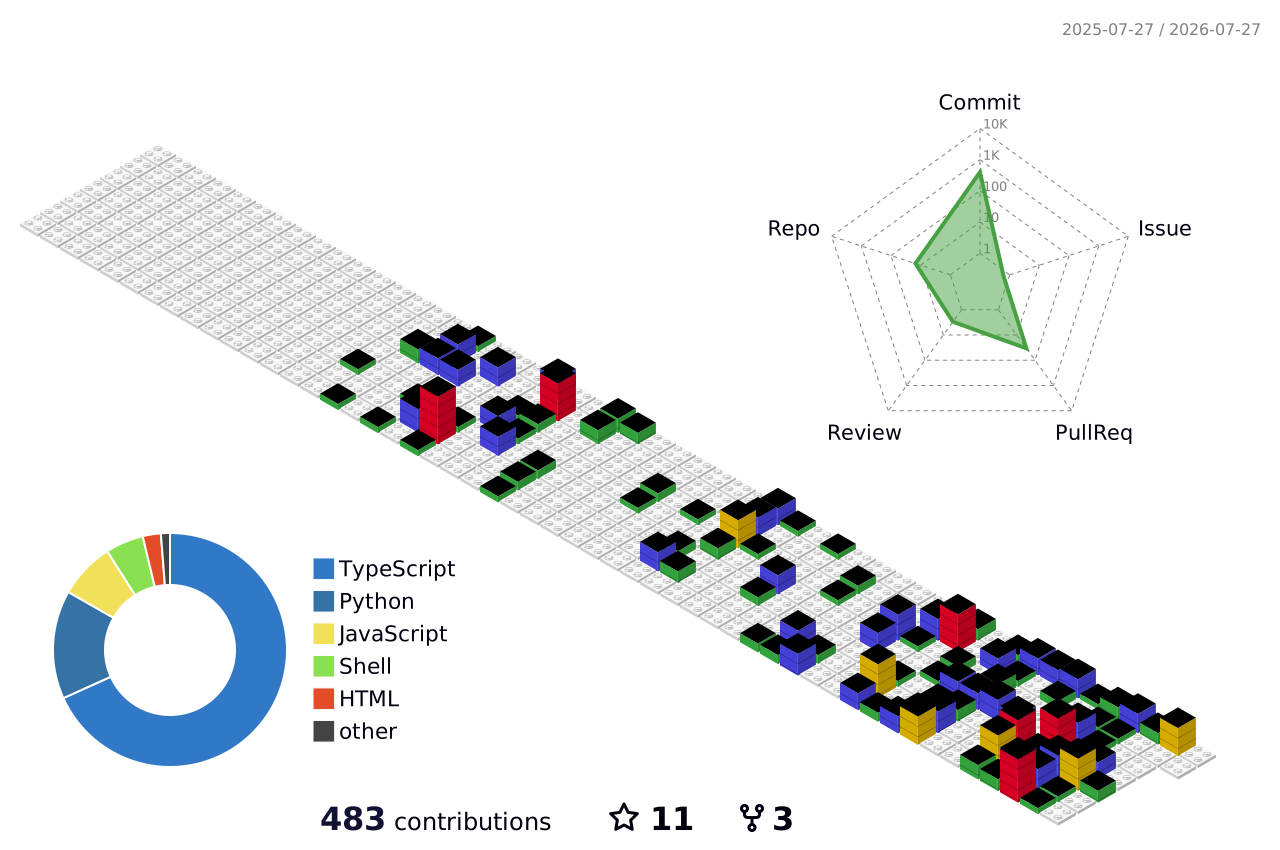
[LIVE GITHUB ACTIVITY]
Think in control flow
Map the execution path. Understand what happens when, and why.
Model failure states
Design for what breaks, not what works. Every system has a failure mode.
Design for observability
If you can't measure it, you can't debug it. Logs, metrics, traces.
Prefer explicit over magical abstractions
Magic is technical debt. Explicit is maintainable.
Break systems to understand them
Chaos engineering isn't optional. It's how you learn.
Contact Ganesh Angadi
07 / CONTACT
View all DevOps projects or connect on GitHub.